
The Spaces That Breathe: Why ‘Psychological Safety’ Rules London Real Estate
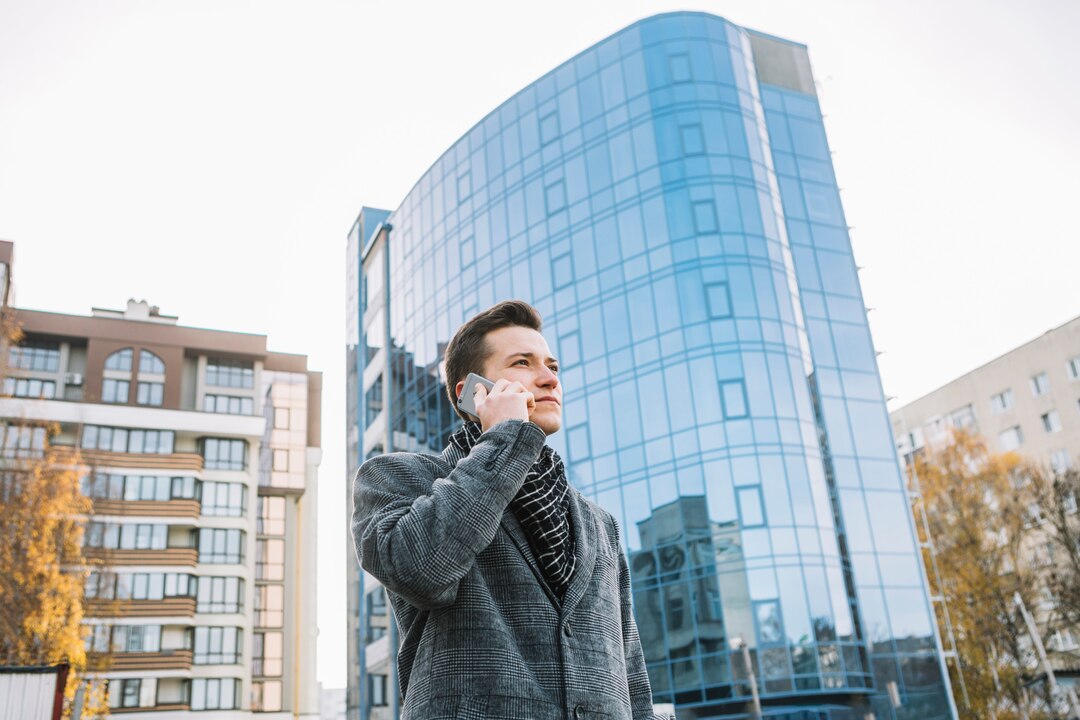
There is a question that London’s more thoughtful property managers have started asking, and it has nothing to do with square footage or lease terms. The question is this: does this building make people feel safe in the way that actually matters? Not physically safe in the crude, perimeter-alarm sense. Safe in the sense that they can breathe. That they are not on edge the moment they walk through the door. That the environment around them is working for them, not just containing them.
This is not soft thinking!
The research is unambiguous. The Chartered Institute of Personnel and Development’s 2024 evidence review on psychological safety found that people in psychologically safe environments are less defensive, more engaged, and more productive. The National Safety Council found that workers in psychologically unsafe environments were 80% more likely to sustain injuries requiring medical attention. And London’s own HSE enforcement data from 2024/25 confirms that mental health and psychosocial risk have moved to the centre of workplace safety inspections, particularly in the financial, legal, and technology sectors where a significant share of the capital’s Grade A occupiers sit.
The market has absorbed this reality. According to data compiled from Savills, Cushman and Wakefield, and CoStar, vacancy for best-in-class London office buildings has fallen below 1% as of early 2026. Meanwhile, secondary stock that cannot demonstrate wellbeing credentials, environmental quality, or a considered occupant experience struggles to lease at any price. Tenants are not just choosing buildings.
What Psychological Safety Actually Means in a Built Environment
The term was coined by Harvard Business School professor Amy Edmondson to describe workplace conditions where people feel safe taking interpersonal risks: speaking up, admitting uncertainty, offering dissenting views. Applied to the built environment, it translates into something more tangible but equally consequential. It means that the physical and human elements of a building work together to produce an atmosphere where occupants feel genuinely at ease.
That atmosphere is assembled from dozens of small signals. The quality of the light in common areas. Whether the air in the lobby is stale or fresh. How the concierge greets someone who is clearly running late and already stressed. Whether the transition from street to workspace feels jarring or composed. Whether a resident returning alone at eleven at night feels watched over or merely watched. None of these signals is individually decisive. Together, they either build trust or erode it, quietly, over the course of every single day.
The Concierge as the Human Anchor
If there is one element within a building’s control that most directly shapes how safe people feel, it is the person at the front. Not the camera above the door. Not the access card reader on the wall. The person. A professionally trained concierge security officer is not simply a checkpoint. They are the human anchor of the building’s social environment.
When that person is genuinely well-trained, the effect is almost invisible. They manage access without making visitors feel interrogated. They handle incidents before those incidents develop a visible shape. They read the room constantly, noting who belongs and who is hesitant, who needs directing and who needs leaving alone. Their composure is, in itself, a form of reassurance.
This is precisely why London’s flight to quality in 2025 was not purely about finishes and floor plates. The UKREiiF 2026 conference, which brought together the country’s leading commercial property players, highlighted that hospitality-inspired spaces and the quality of the human experience within a building had become central to leasing competitiveness. The concierge function was explicitly named as a differentiator. Buildings that invest in it are leasing faster and retaining occupants longer.
Environment as Silent Communication
Beyond the human layer, the physical environment communicates constantly. Buildings that are well-maintained communicate care. Buildings where common areas are clean, well-lit, and unhurried communicate that someone is paying attention. Buildings where maintenance requests are resolved before occupants have to repeat them communicate competence. Each of these signals contributes to or diminishes the sense of psychological safety that determines whether people want to spend time in a space.
The integration of facilities management with the broader security and concierge operation is where this becomes practically significant. A building where the security team and the facilities team operate in silos communicates exactly that: a fragmented operation that nobody is holding together. A building where both functions are coordinated under a single management structure communicates the opposite. The environment feels intentional.
Access Control That Does Not Feel Like Control
There is a particular tension in access management that buildings often handle badly. Security requires control. Psychological safety requires freedom. The answer is not to sacrifice one for the other. It is to design and operate access control systems so intelligently that control becomes invisible to those who belong and unmistakable only to those who do not.
Biometric entry, smart card systems, and digital visitor management, when integrated properly and operated by a trained team, do exactly this. The authorised resident or employee moves through the building with ease. Their movement is logged, their access is secure, and they feel none of the friction that would tell them they are being processed rather than welcomed. The technology recedes. The experience becomes simply: this is a building that works.
The Business Case Is No Longer a Question
London’s office market data from 2025 shows that lettings in recently developed or comprehensively refurbished offices accounted for 77% of space acquired, and that space let in BREEAM Outstanding or Excellent buildings represented 64% of take-up, a 5% increase on the prior year. BREEAM’s assessment framework includes health and wellbeing as a core certification dimension, and that dimension increasingly encompasses the quality of the managed environment, not just the building’s physical specification.
Psychological safety is no longer a philosophical add-on for the conscientious landlord. It is a commercial lever. Buildings that achieve it, through considered concierge design, integrated electronic security, and a genuinely managed environment, command better rents, attract stronger tenants, and hold them longer. Buildings that do not are finding that the market has moved on without them.
At Lexnis Services, we work with property managers and building operators across London who understand this shift and want to get ahead of it rather than respond to it. If you want to talk through what a properly integrated security and concierge operation looks like for your building, contact our team and we will give you a straight answer.